Monument Valley Photo Spots: Where and When to Shoot
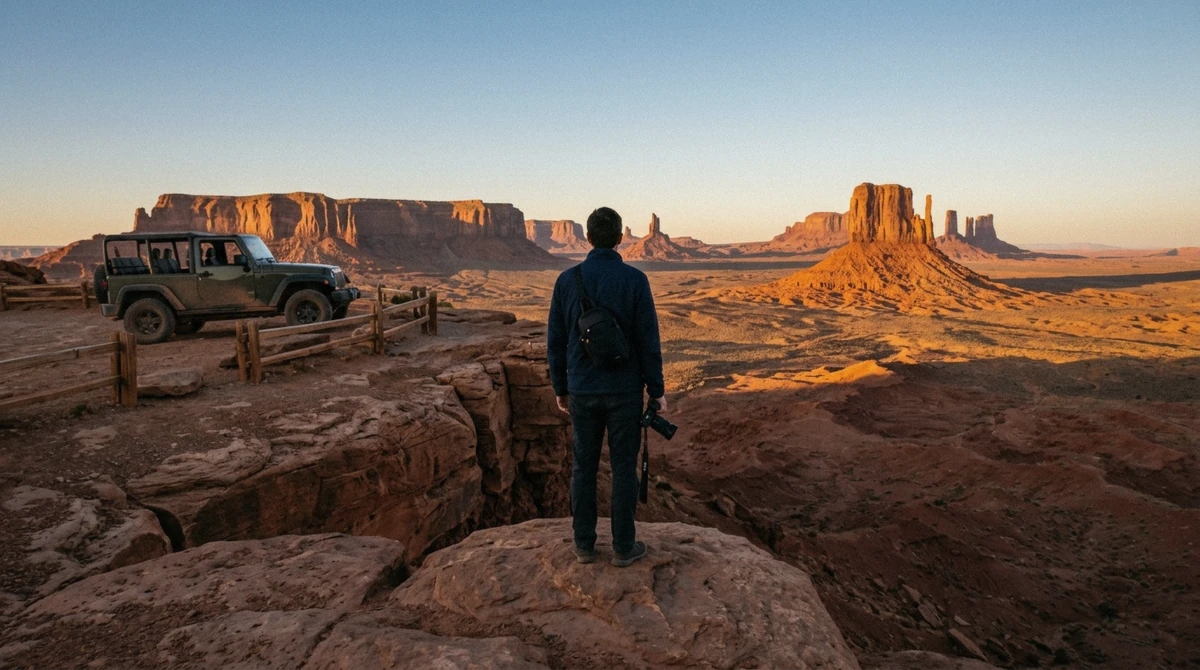
The best monument valley photo spots split into two groups, and knowing which is which before you arrive saves you a wasted morning. Six or so are on the 17-mile Valley Drive loop or at the visitor centre, open to anyone with a car and a park ticket. The rest, Teardrop Arch, Ear of the Wind, Sun's Eye, the Big Hogan, Mystery Valley and Hunts Mesa, sit off that loop and are reachable only with a licensed Navajo guide, the same restriction that keeps them uncrowded and largely unphotographed by comparison. This guide walks both lists, gives real light-timing guidance instead of a vague nod to golden hour, and covers the one roadside stop, Forrest Gump Point, that most posts mention without the safety warning it actually needs. Jeep tours that reach the arches and the backcountry run daily out of the valley if the guide-only list is the one you came for.
Quick answer
The single best free shot in Monument Valley is the visitor centre terrace overlooking the Mittens and Merrick Butte, no driving required. The shots you cannot get any other way, Teardrop Arch, Ear of the Wind, Hunts Mesa looking down on the whole valley, all sit past the point a private vehicle is allowed and need a licensed Navajo guide to reach.
Key takeaways
- Best free spot: the visitor centre terrace, framing the Mittens and Merrick Butte, no fee beyond park entry
- Best guide-only shot: Hunts Mesa, the only vantage point looking down onto the buttes from above
- Sunrise lights the east faces of the buttes directly; sunset gives warm side light and long shadows across the valley floor
- Roadside bonus shot: Forrest Gump Point sits outside the park entirely, free, but on a live highway
- Reach the arches with the extended backcountry trip or the sunrise run, both built around stopping for photos
- Drones are banned across the whole park, no exceptions for photographers
The Spots at a Glance
| Spot | Where | Best light | Access |
|---|---|---|---|
| The Mittens and Merrick Butte | Visitor centre terrace | Sunrise, direct east light | Free, no driving |
| John Ford's Point | On the 17-mile loop | Sunrise or sunset | Self-drive |
| Artist's Point | On the 17-mile loop | Sunset, quieter than John Ford's Point | Self-drive |
| North Window | On the 17-mile loop | Late afternoon | Self-drive |
| Three Sisters | On the 17-mile loop | Midday works less badly here than elsewhere | Self-drive |
| Totem Pole (from the loop) | Visible from the loop road | Sunset silhouette | Self-drive; close angles are backcountry |
| Teardrop Arch | Off the loop | Guide sets the timing | Licensed Navajo guide only |
| Ear of the Wind | Off the loop | Guide sets the timing | Licensed Navajo guide only |
| Sun's Eye | Off the loop | Guide sets the timing | Licensed Navajo guide only |
| Hunts Mesa | Above the valley floor | Sunrise or sunset from height | Licensed Navajo guide only |
| Forrest Gump Point | US 163, mile marker 13, Mexican Hat, UT | Any time, watch for traffic | Free, outside the park |
Read the table as two lists stitched together. The top six rows are yours with a car and a park ticket. The next four need a licensed Navajo guide, and the last row is a roadside pull-off that has nothing to do with the park at all.
Last verified: August 2026.
Trips That Reach the Guide-Only Spots
These three run the routes that get you past the loop and into the backcountry photo spots above.
 from $83.09
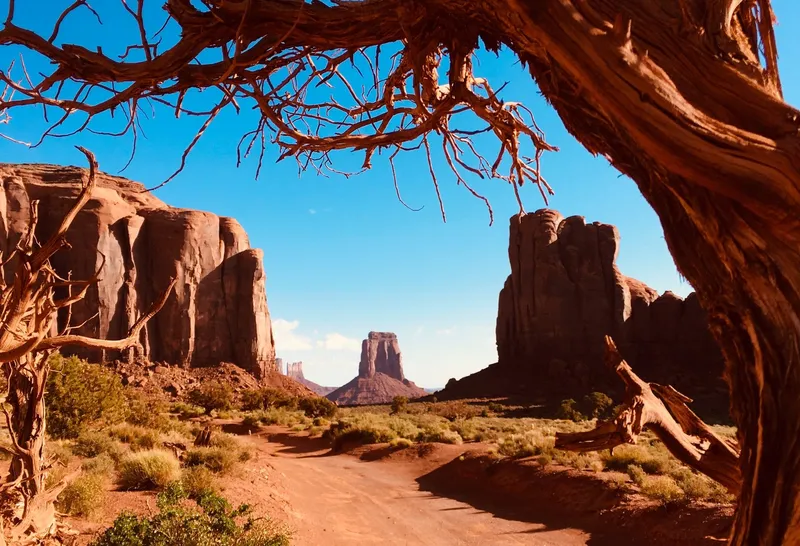
 Monument Valley Extended Backcountry Jeep Tour (3.5 Hours)
Take the extended jeep tour of Monument Valley and its backcountry to see even more of the breathtaking natural beauty and iconic monuments, with extra time at each…
- Extended 3.5-hour route with backcountry access
- Extra time at each scenic stop
- Navajo guide and open-air 4x4
- Arches, hogans, and hidden overlooks
 from $85.00
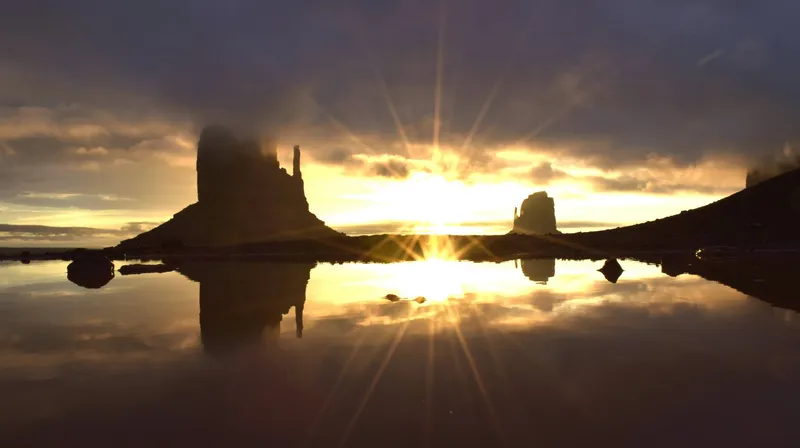
 Monument Valley 3-Hour Sunrise Jeep Tour
Visit dwellings, landmarks, and historical locations on this guided 3-hour sunrise jeep tour of Monument Valley. Choose from a private or shared experience for a personal adventure.
- Private or shared sunrise option
- Traditional dwellings and landmarks
- Historical valley locations
- Soft early-morning light
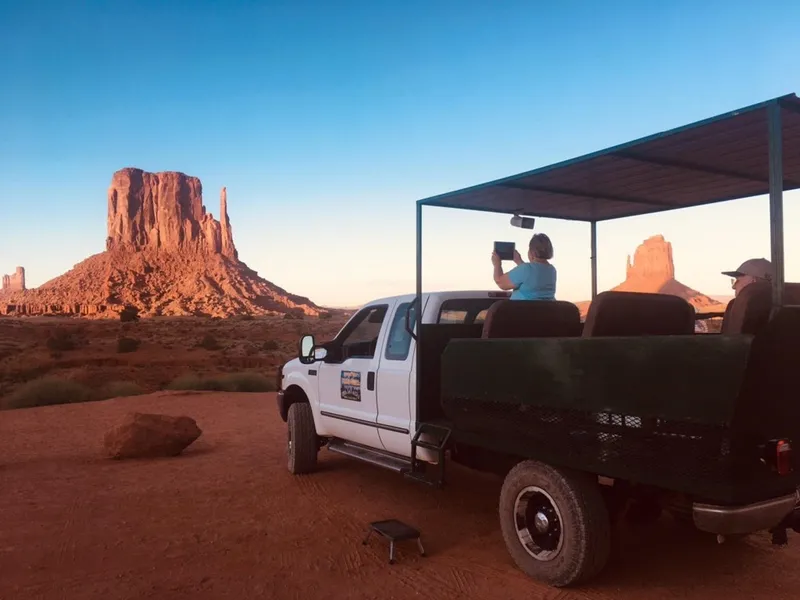 from $146.63
 Monument Valley & Mystery Valley Full-Day Jeep Tour
Spend a full day visiting both the main sights of Monument Valley and the hidden Mystery Valley, exploring ruins and petroglyphs while learning about Navajo Nation traditions on…
- Both Monument Valley and Mystery Valley
- Ancient ruins and petroglyphs
- Small-group, full-day adventure
- Navajo Nation traditions explained
The Free Spots You Can Reach on Your Own
The visitor centre terrace is the shot the whole park is known for: the Mittens and Merrick Butte lined up in one frame, no driving involved. From there, the 17-mile Valley Drive is the only part of the park a private vehicle can enter, and it strings together the rest of the self-drive list. John Ford's Point, the wide panoramic overlook named for the director whose 1939 film Stagecoach first put these buttes on screen, is the loop's other well-known stop.
Artist's Point covers a similar sweep of the valley and draws fewer people at the same hour.
North Window frames East Mitten Butte between Elephant Butte and Cly Butte, a tighter, more graphic composition than the wide shots at the two overlooks above. Three Sisters, a cluster of slender sandstone spires, sits further along the loop and reads well in either direct or flat light, which makes it a reasonable stop if you arrive mid-morning after the best light has already passed elsewhere. The Totem Pole and the Yei Bi Chei spire group are visible from the loop road too, though the close, dramatic angles photographers usually want are backcountry and need a guide.
The road itself is a factor in the shot list, not just a way to get between stops. The Valley Drive is unpaved with rough terrain and deep sand dunes at the time of writing, and motorcycles and RVs are prohibited on the loop, per Navajo Nation Parks & Recreation's current notice. Expect long wait times at busy hours.
Entry runs $10 per person per day plus $15 per vehicle for the Scenic Drive, and the National Park Pass is not accepted here. Last verified: August 2026. Hours and the exact gate schedule belong to driving the loop on your own, which covers the fee and closing times in full.
Forrest Gump Point, and the Safety Part Nobody Mentions
Forrest Gump Point sits on U.S. Highway 163 near mile marker 13 in Mexican Hat, Utah, roughly 13 to 15 miles north of the park entrance and not part of the loop at all. It is the straight stretch of highway from the 1994 film where the road runs directly at the buttes, and it costs nothing to shoot.
The safety part most posts skip: it is a live highway. People stand in the traffic lane to get the classic centered shot, and traffic does not stop for them. Cars and trucks come around a rise with little warning, and there is no shoulder wide enough to call safe.
If you shoot here, use a spotter, step off the road the moment you hear an engine, and treat the ten seconds it takes to get the frame as the riskiest part of your whole Monument Valley trip, not an afterthought.
The Guide-Only Spots and What Makes Them Different
Teardrop Arch, Ear of the Wind, Sun's Eye, the Big Hogan, Mystery Valley and Hunts Mesa sit past the point a private vehicle is allowed. Navajo Nation Parks & Recreation states plainly that places such as Ear of the Wind and other landmarks can only be accessed via guided tours, and the restriction is a working part of how the park protects sites that carry cultural and spiritual weight for the Diné, not a hurdle put there to sell tours. A licensed Navajo guide is the only legal way in, and Navajo Nation Parks publishes the list of operators authorized to bring visitors there.
The payoff is real. Hunts Mesa is the one vantage point that looks down onto the buttes from above rather than up at them from the valley floor, an angle no self-drive stop offers at any distance. Mystery Valley adds arches, petroglyphs and cliff dwellings spread across a quieter stretch of backcountry that sees a fraction of the loop's traffic. The extended backcountry trip is built specifically around stopping longer at each of these, at $83.09 for 3.5 hours, and gives a guide time to place you for the shot rather than rushing the group through.
How the Light Works Here, Hour by Hour
Monument Valley's buttes face the rising sun, so sunrise lights their east faces directly, a clean, warm wash across the sandstone with long shadows still stretched across the valley floor. As the sun climbs, that contrast flattens fast, and by mid-morning the light turns hard and shadowless, the least forgiving stretch of the day for anyone shooting the buttes rather than people or close detail.
Sunset works differently: the light comes in low from the side rather than head-on, which paints the west faces warm while throwing the eastern side of each formation into shadow, and the shadows themselves stretch long across the flats. Both windows are short, and both are covered by tours timed to have you in place before the light starts, so you're not driving the loop while the best ten minutes pass.
Check the clock before you set an alarm
One trap catches photographers here more than any other. The Navajo Nation observes daylight saving time even though most of Arizona does not, so between March and November the valley runs an hour ahead of Phoenix, Flagstaff and the town of Page. A dawn departure booked while you are staying off the reservation starts an hour earlier than your phone's habit suggests.
The month-by-month sunrise and sunset times are worked out in local Navajo Nation time so you can set the alarm against the right clock.
The Mitten Shadow
Around the middle of March and again around the end of September, the shadow of West Mitten Butte falls across East Mitten Butte in the late afternoon, a seasonal alignment tied to the sun's position rather than a fixed calendar date. No exact date is published for either window, so treat it as a loose target worth a few days either side rather than a single afternoon to plan a whole trip around.
Sunrise or Sunset for Photographers
Sunrise
- Direct light on the east faces of the Mittens, the classic postcard angle
- Cooler temperatures for standing around waiting on the shot
- Fewer people out; the loop and the visitor centre terrace are quieter
- In June this means being in position before 6:00 am; in December sunset is not until around 5:05 pm, so the winter morning start is a far easier one
Sunset
- Warm side light and long shadows across the valley floor, a more dramatic frame than sunrise's flatter east-face wash
- A more forgiving wake-up time year round
- The Totem Pole and backcountry spires read best in silhouette at this hour
- In June sunset falls around 8:40 pm, giving a long, unhurried golden hour before dark
Verdict Neither beats the other outright. Sunrise wins if the direct light on the Mittens' east faces is the shot you came for; sunset wins for drama and an easier schedule most of the year. Which month gives you the light you want covers how sunrise and sunset times shift across the year in full.
What to Bring and What Will Not Work
The valley is dusty and often windy, and that shapes the gear list more than any lens choice.
- A lens cloth, and somewhere out of the wind to change lenses without dust getting in
- A spare battery; cold mornings drain them faster than you expect
- A polarizing filter for the flat midday hours, if you end up shooting then
- Sturdy footwear for the Wildcat Trail, the park's only self-guided hiking trail, signed in and out at the visitor centre
- What will not work: a tripod in an open-air 4x4. The vehicle moves and vibrates constantly, so a fast shutter speed does the job a tripod can't while you're rolling
- What will not work: a drone. They are banned across every Navajo Tribal Park, no recreational or commercial exception
Rules That Affect Photographers: Drones, Commercial Permits, Sacred Sites
The Navajo Nation prohibits drones and other aircraft within Navajo Tribal Parks including Monument Valley, a nation-wide rule with no exception for hobbyist or commercial flights. Photographs or video taken for commercial use are prohibited unless accompanied by a valid permit, so a paid shoot, not a personal trip, needs to be arranged with Navajo Nation Parks & Recreation ahead of time. Climbing on the monuments and buttes is strictly prohibited in Navajo Tribal Park areas, for the same reason the backcountry arches are guide-only: these are places that carry cultural and spiritual meaning, and the restrictions exist to protect them, not to inconvenience a photographer.
| Rule | What it means for photographers |
|---|---|
| Drones | Banned across every Navajo Tribal Park, no recreational or commercial exception |
| Commercial photography | Requires a valid permit from Navajo Nation Parks & Recreation |
| Climbing on buttes or arches | Strictly prohibited, personal-use or commercial |
| Off-trail travel | Stay on designated routes; the backcountry list above is guide-only for this reason |
Last verified: August 2026.
Which Photo Approach Fits Your Morning
If you have one sunrise and want the postcard shot
go straight to the visitor centre terrace, no guide or booking needed.
If you want Teardrop Arch, Ear of the Wind or Hunts Mesa in frame
book a licensed Navajo guide well before your trip, they're the only legal way in.
If you're driving the loop yourself and want more than the six self-drive spots
add the extended backcountry trip for the same day rather than trying to talk your way past the boundary.
If you only have a car and no guide booked
stick to the self-drive list above and save the arches for a return trip; there is no legal workaround.
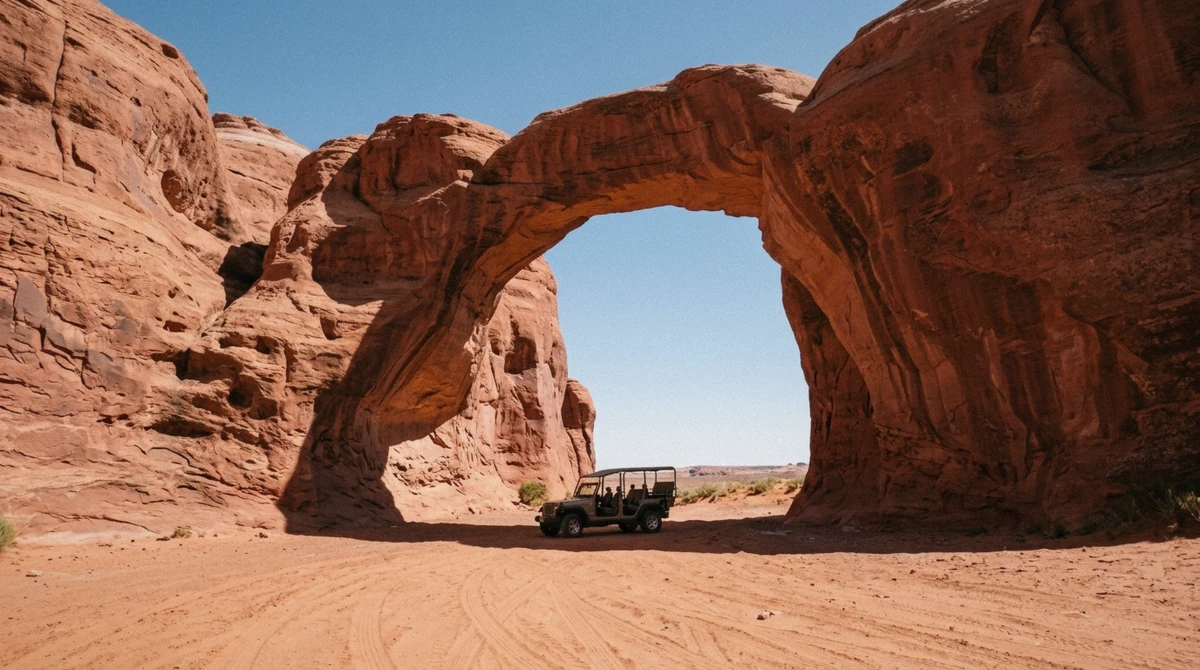
Most of a Monument Valley photo trip comes down to picking one clean window of light and being in position before it arrives, whether that means parking at the visitor centre terrace at dawn or riding out past the loop with a guide who already knows where the shadows will fall that afternoon. The free spots cover the postcard shots everyone recognizes; the guide-only spots cover the ones almost nobody else has.
Frequently Asked Questions
Where is the best place to photograph Monument Valley?
For a free shot, the visitor centre terrace overlooking the Mittens and Merrick Butte. For the shot nobody else has, Hunts Mesa, which looks down onto the buttes from above and needs a licensed Navajo guide to reach.
Where is Forrest Gump Point?
On U.S. Highway 163 near mile marker 13 in Mexican Hat, Utah, about 13 to 15 miles north of the park entrance. It is a roadside stop on a live highway, not part of the Valley Drive loop.
Can you fly a drone over Monument Valley?
No. The Navajo Nation prohibits drones and other aircraft across every Navajo Tribal Park, including Monument Valley, with no recreational or commercial exception.
What time of day is best for photographing the buttes?
Sunrise for direct light on the east faces; sunset for warm side light and long shadows. Midday is the flattest, harshest light of the day. The sunrise run and the sunset options both time arrival to the light.
What Monument Valley arches need a guide?
Teardrop Arch, Ear of the Wind, Sun's Eye, the Big Hogan, Mystery Valley and Hunts Mesa are all off the self-drive loop and require a licensed Navajo guide.
When does the Mitten shadow happen?
Around the middle of March and again around the end of September, when the shadow of West Mitten Butte falls across East Mitten Butte in the late afternoon. No exact date is published for either window.